


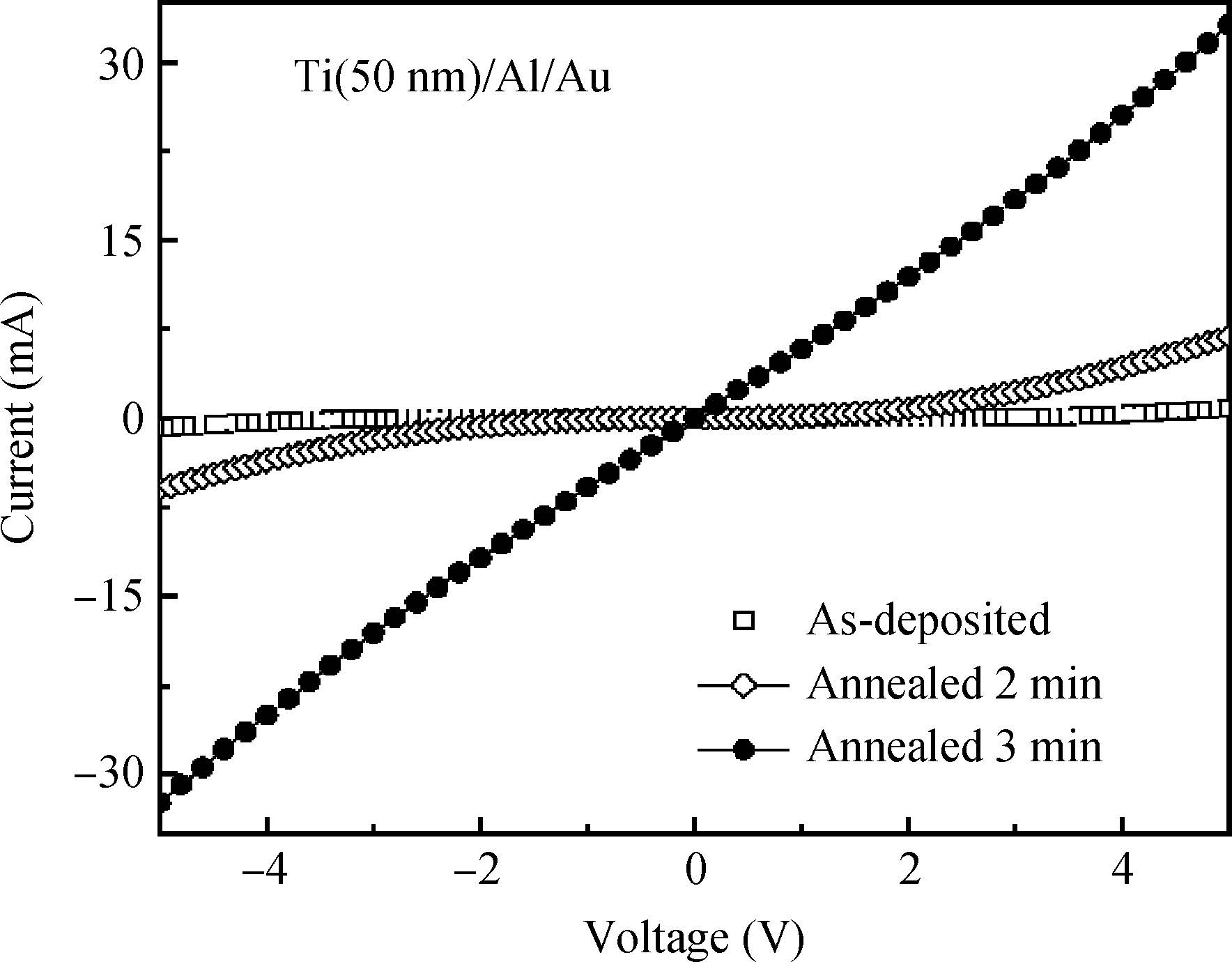
Fig1.
$I$--$V$ characteristics of the Ti (50 nm)/Al/Au contact before and after annealing at 1050 ℃.
SEMICONDUCTOR MATERIALS
Chao Han1, Yuming Zhang1, , Qingwen Song1, 2, Xiaoyan Tang1, Hui Guo1, Yimen Zhang1, Fei Yang3 and Yingxi Niu3
Corresponding author: Zhang Yuming,Email:zhangym@xidian.edu.cn
Abstract: Ti/Al/Au ohmic contacts to p-type 4H-SiC in terms of a different annealing time and Ti composition are reported. At 1050℃, proper increase in annealing time plays a critical role in the Schottky to ohmic contact conversion. With the optimized annealing time, the contact with a high Ti content yields a lower specific contact resistivity(ρc) of 6.4×10⁻⁵ Ω·cm2 compared with the low-Ti contact. The annealed surface morphology and phase resultants were examined by scanning electron microscopy(SEM) and X-ray diffraction(XRD), respectively. For the better ohmic contact, element distribution and chemical states were qualitatively identified by X-ray photoelectron spectroscopy(XPS) depth analysis. In particular, the presence of C and a Si-related phase was discussed and associated with the change in the surface status of the as-grown epilayer of 4H-SiC during annealing. The results reveal that the out-diffused C and Si atoms, with an approximate atomic ratio of 1:1 in the contact layer, can combine to form an amorphous Si-C state. The polycrystalline graphite instead of an unreacted C cluster in the whole alloyed structure and an extra nanosize graphite flake on the outermost surface of the annealed contact were confirmed by Raman spectroscopy.
Key words: 4H-SiC, p-type, ohmic contact, titanium, aluminum, gold
| [1] | |
| [2] | |
| [3] | |
| [4] | |
| [5] | |
| [6] | |
| [7] | |
| [8] | |
| [9] | |
| [10] | |
| [11] | |
| [12] | |
| [13] | |
| [14] | |
| [15] | |
| [16] | |
| [17] | |
| [18] | |
| [19] | |
| [20] | |
| [21] | |
| [22] | |
| [23] | |
| [24] | |
| [25] | |
| [26] | |
| [27] | |
| [28] | |
| [29] | |
| [30] | |
| [31] | |
| [32] | |
| [33] | |
| [34] |

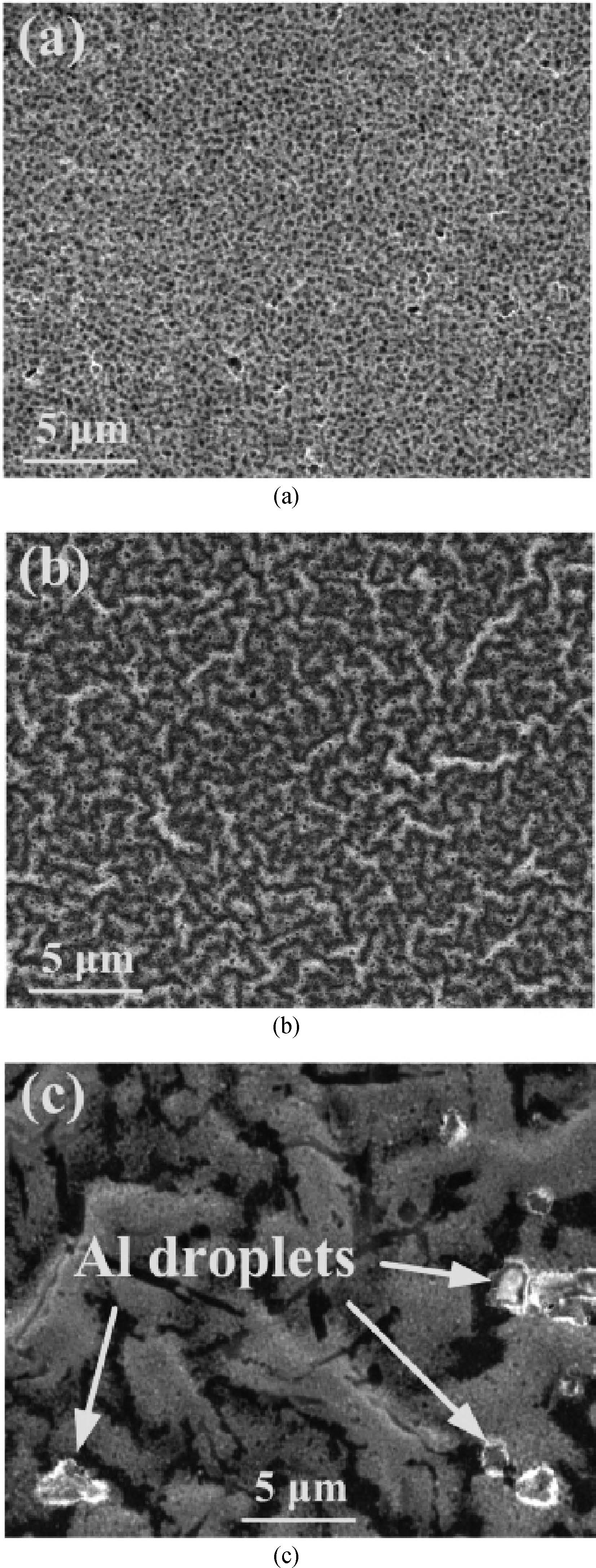
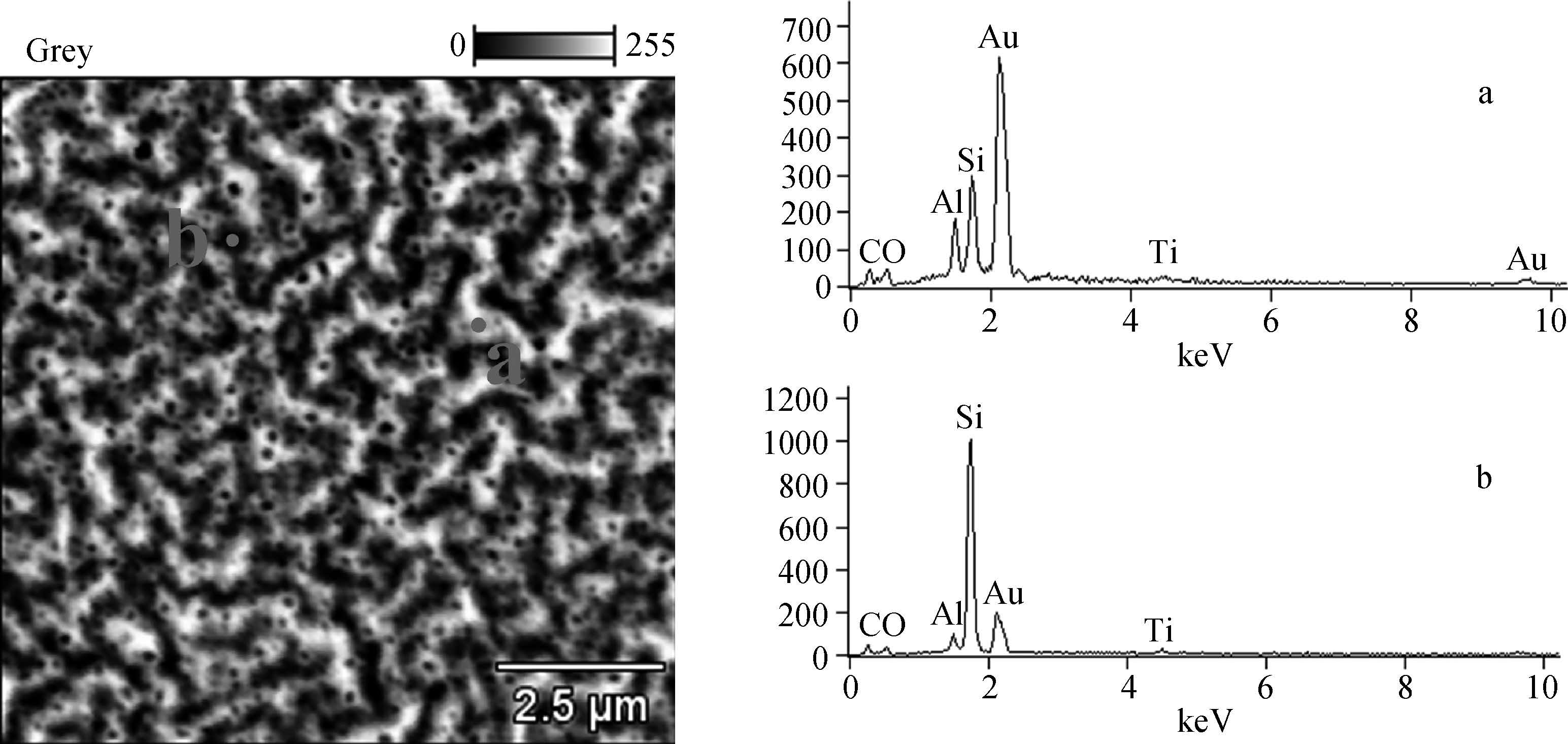
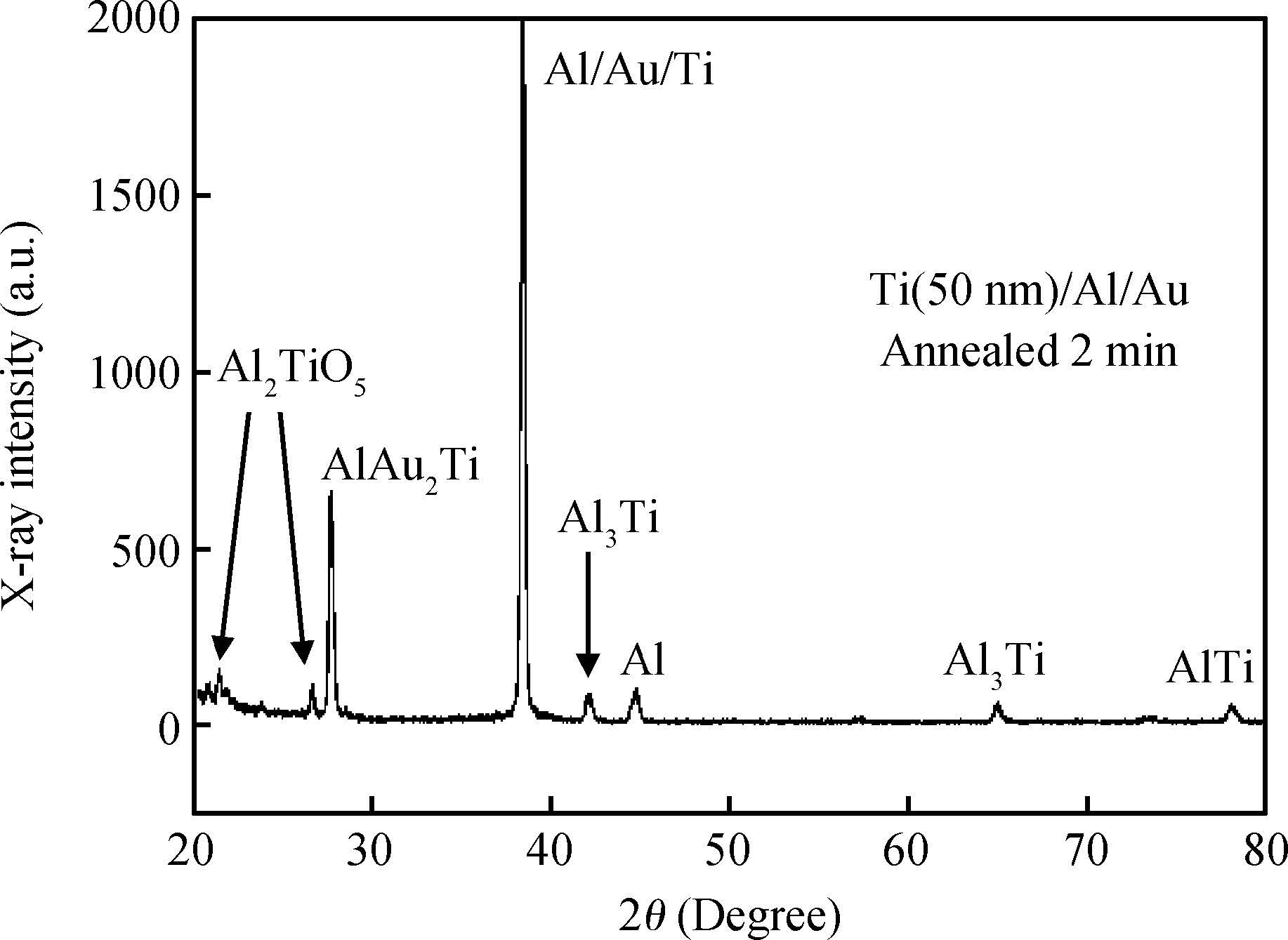
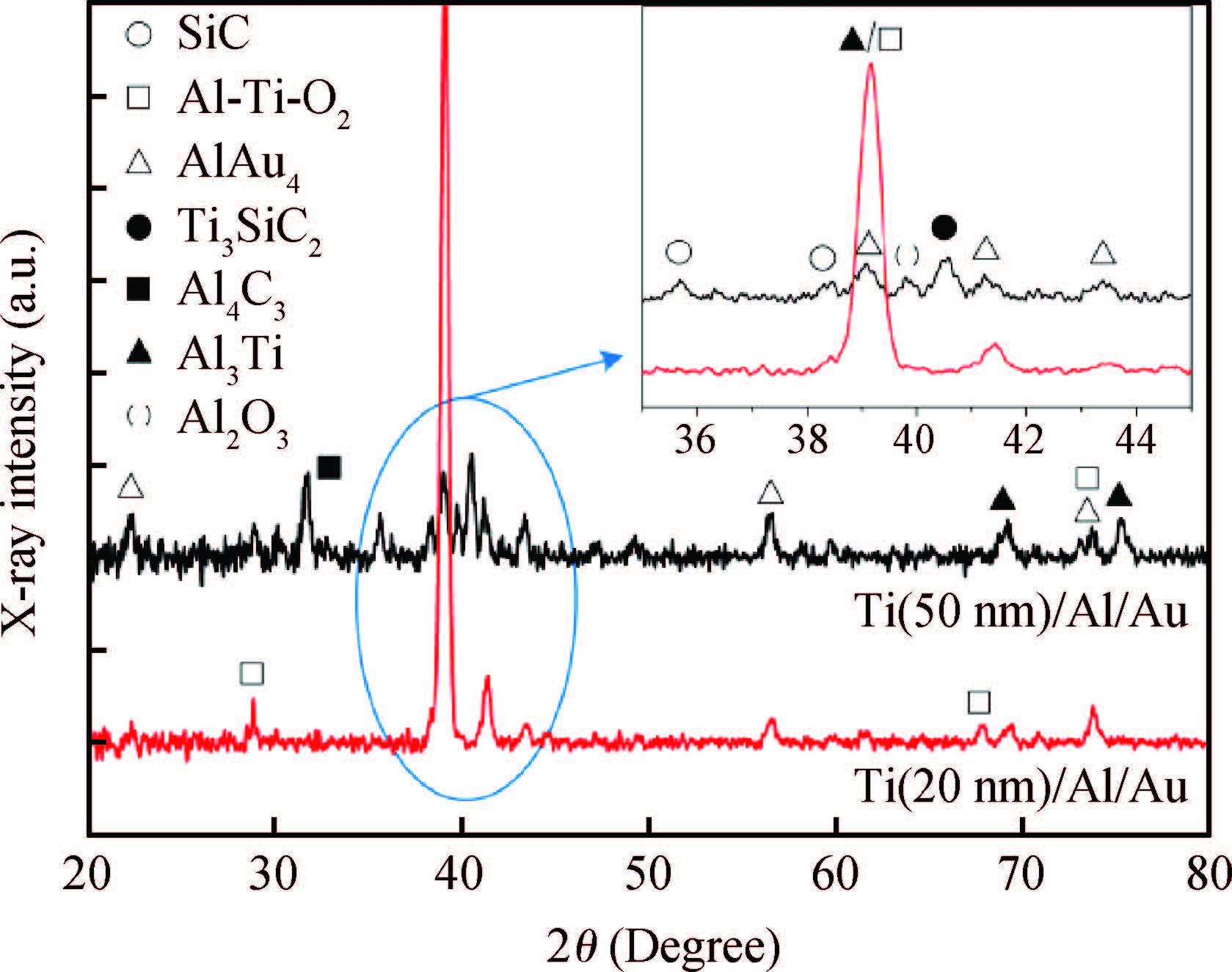
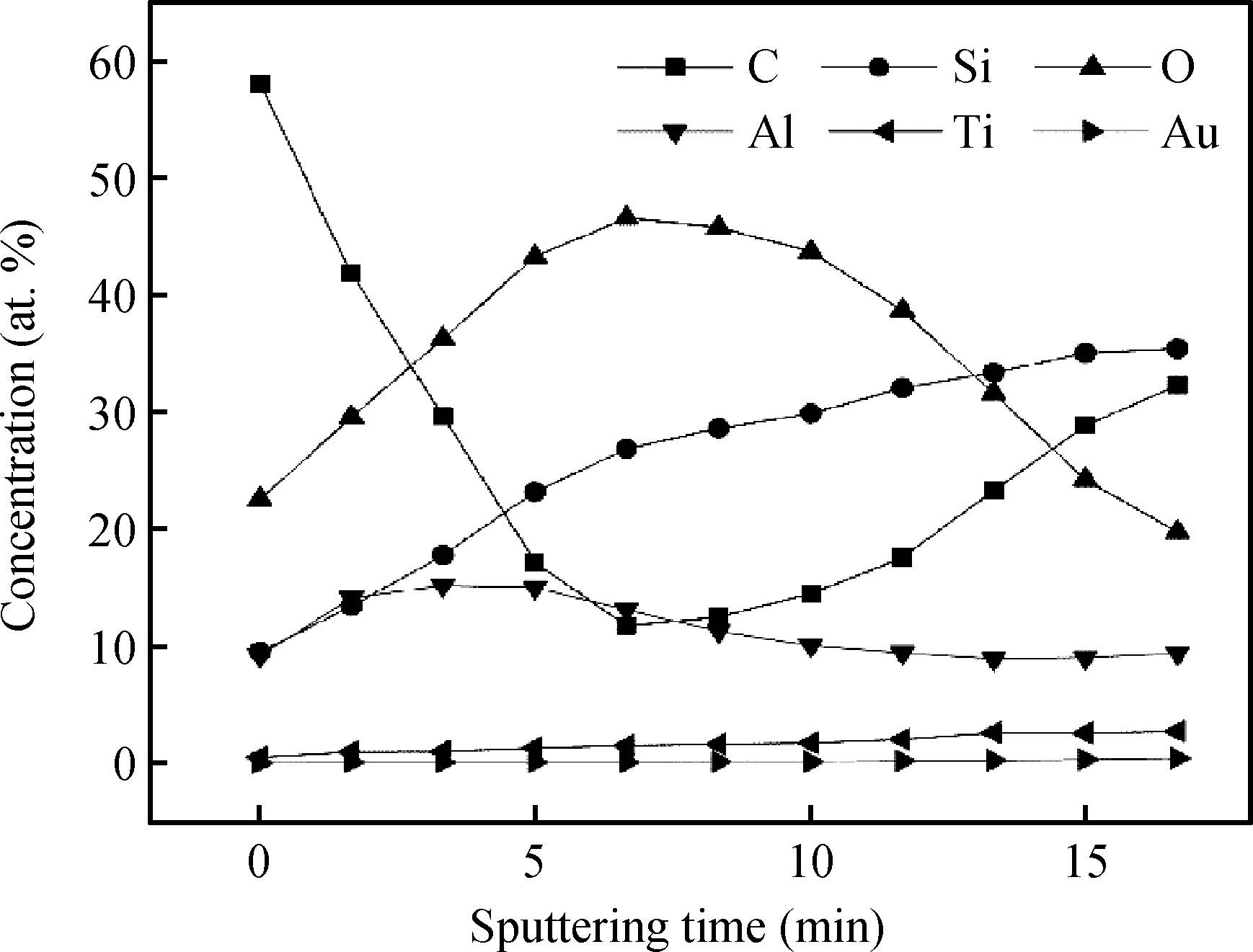
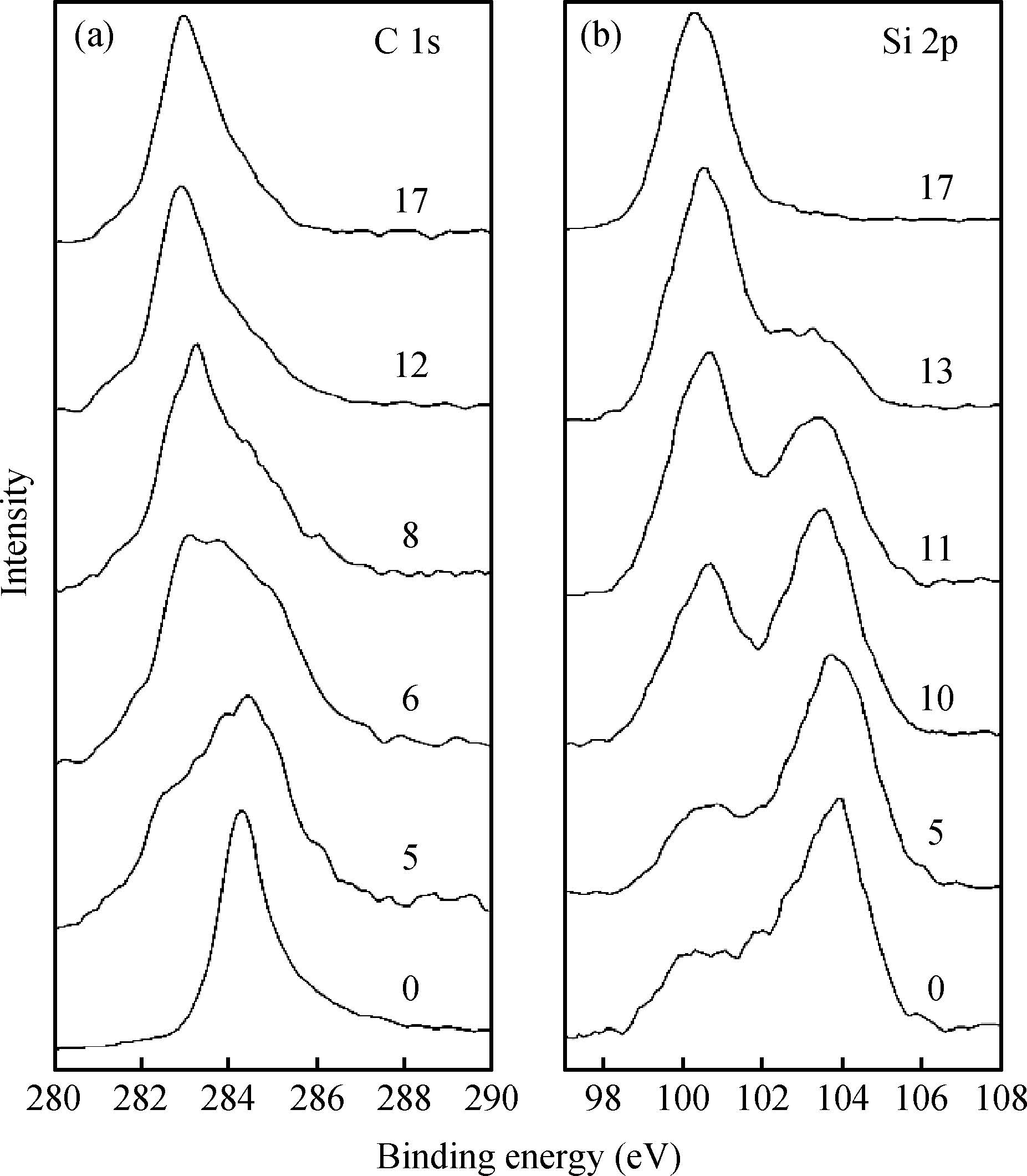
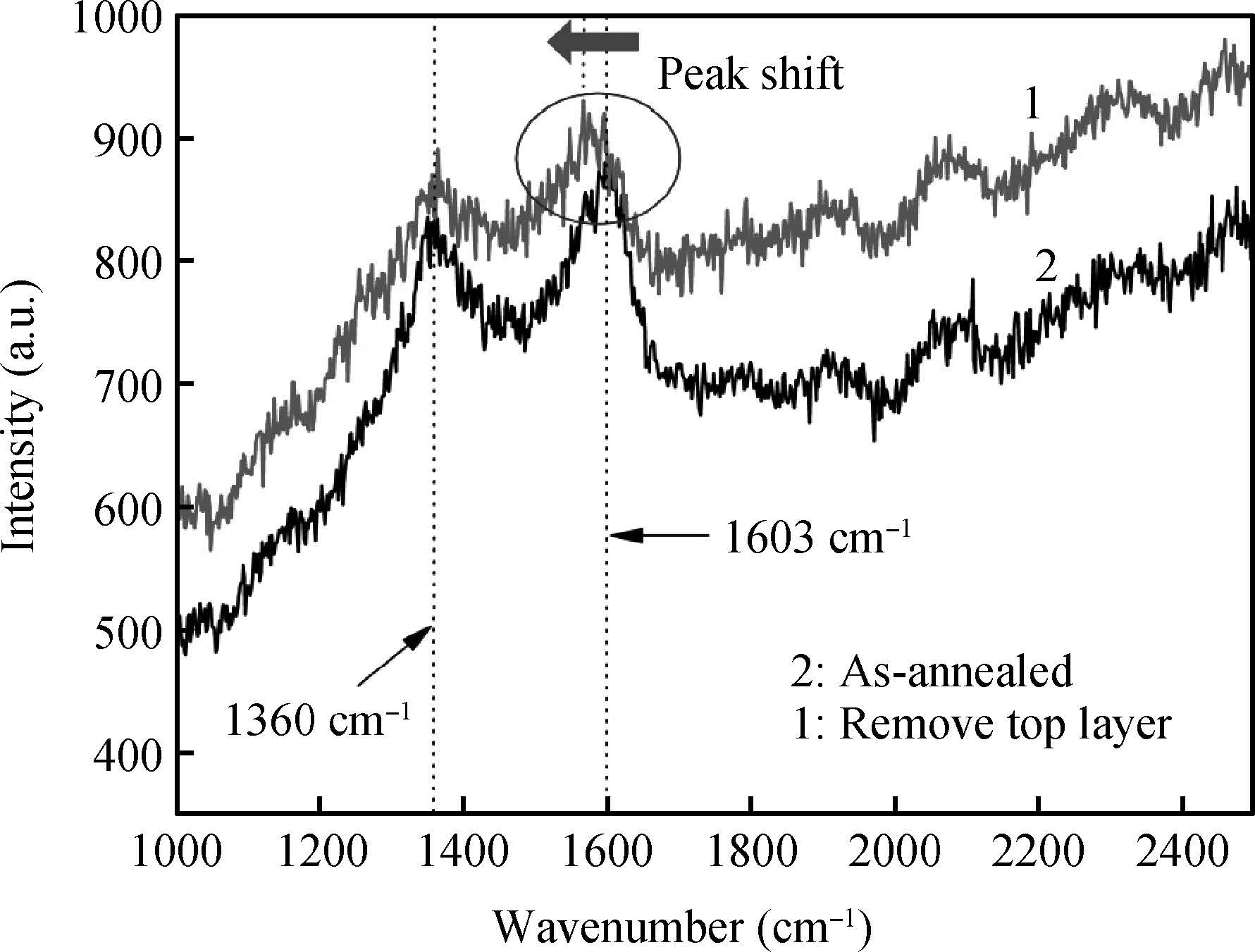
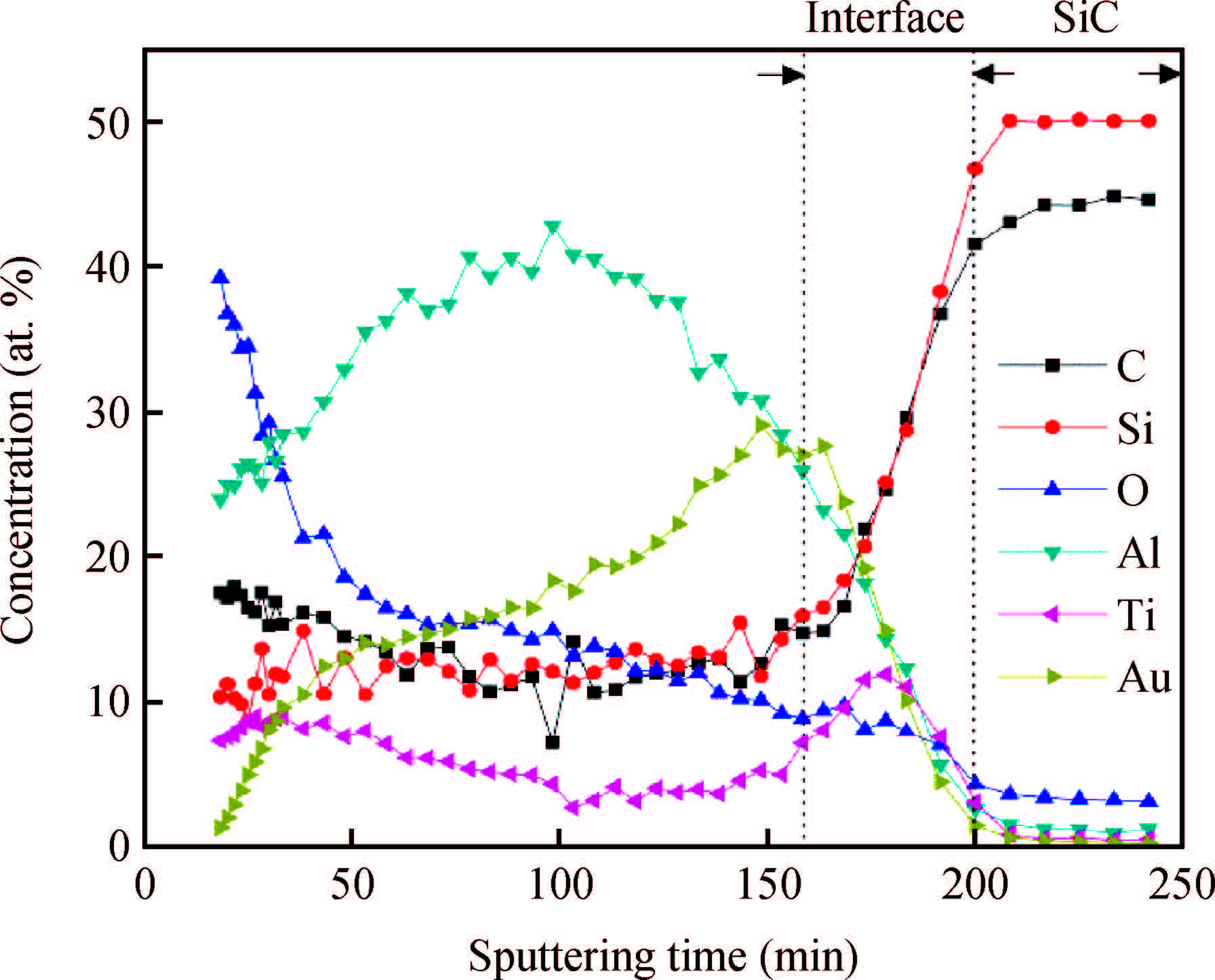
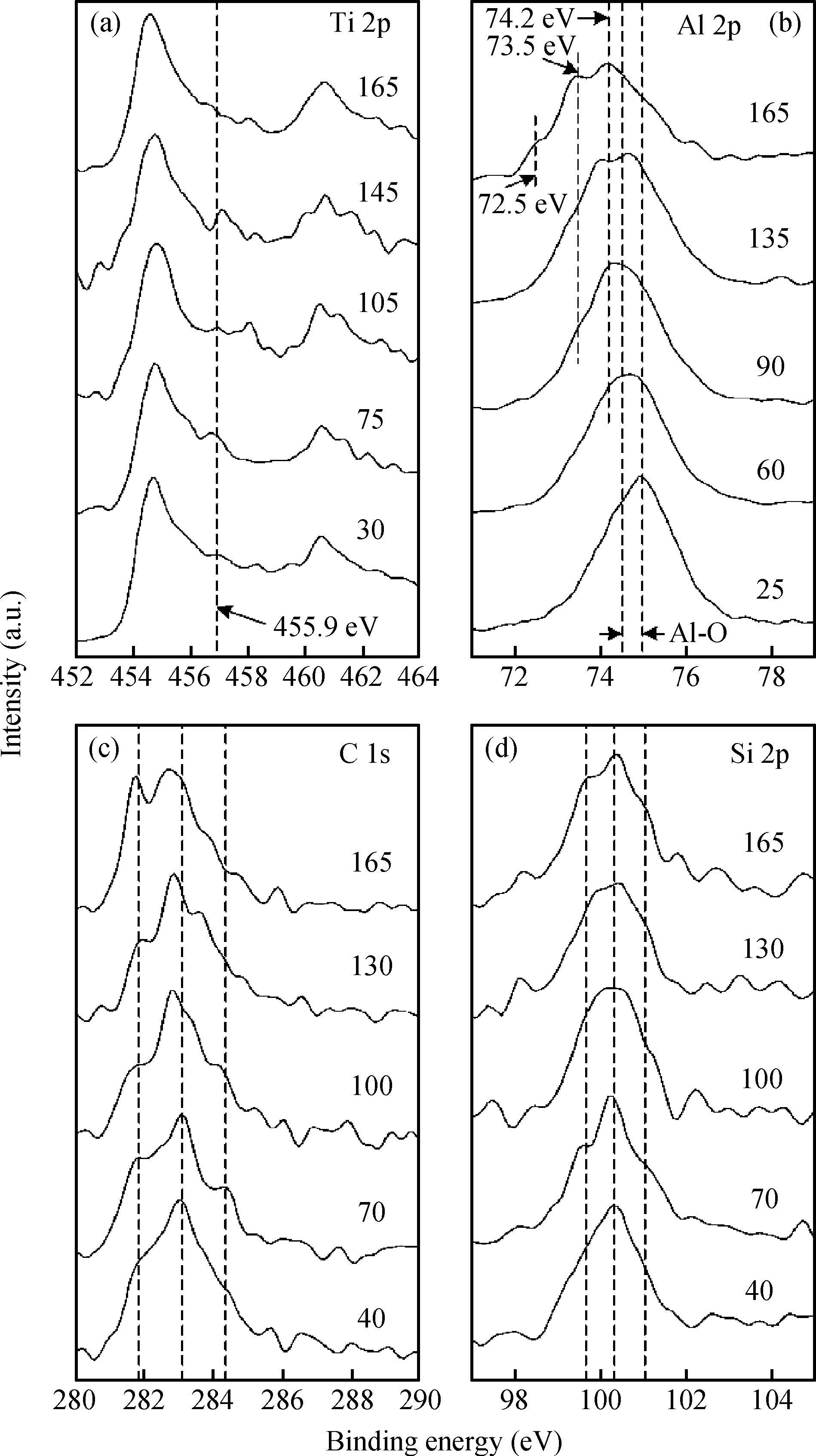
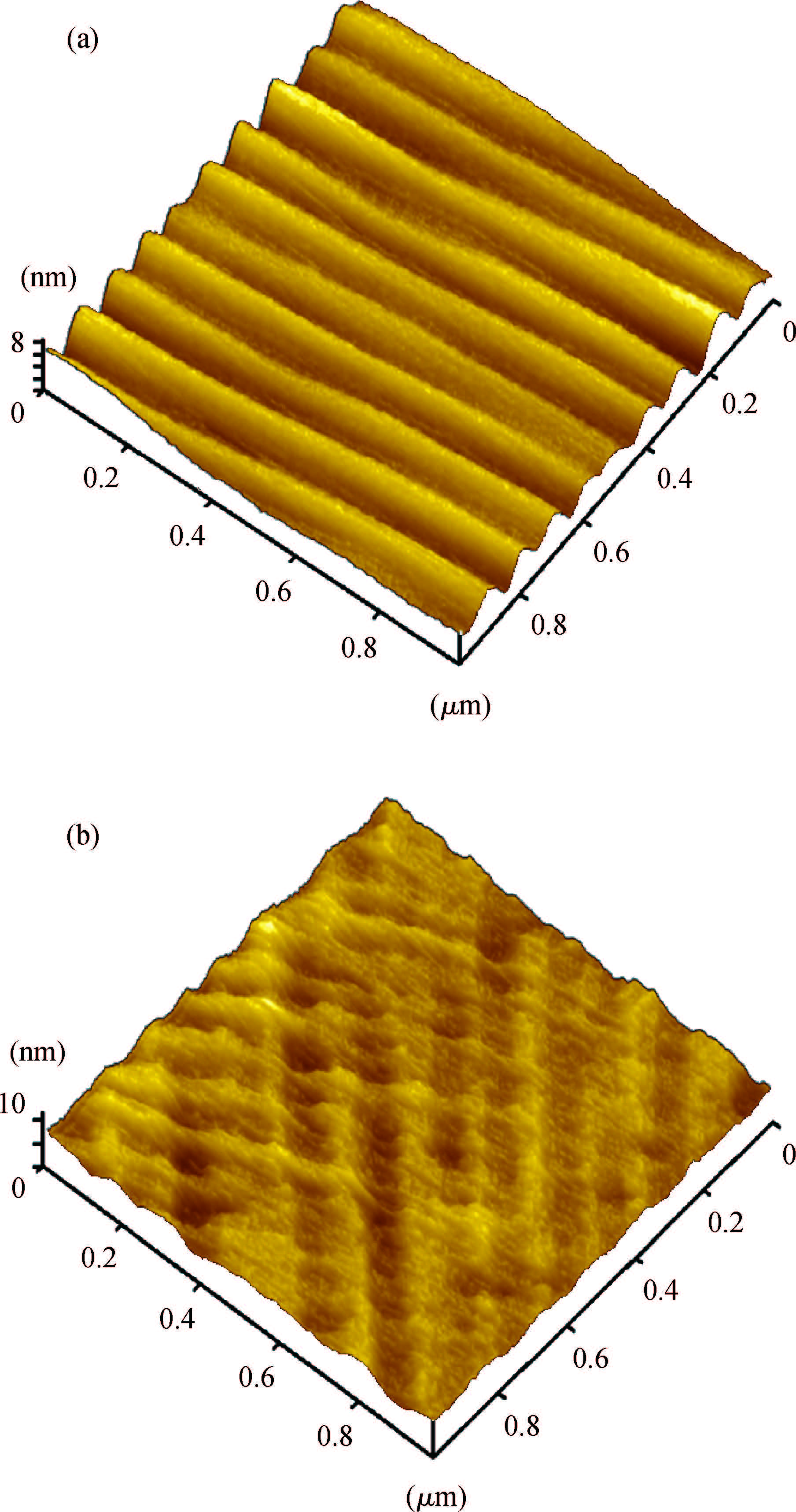
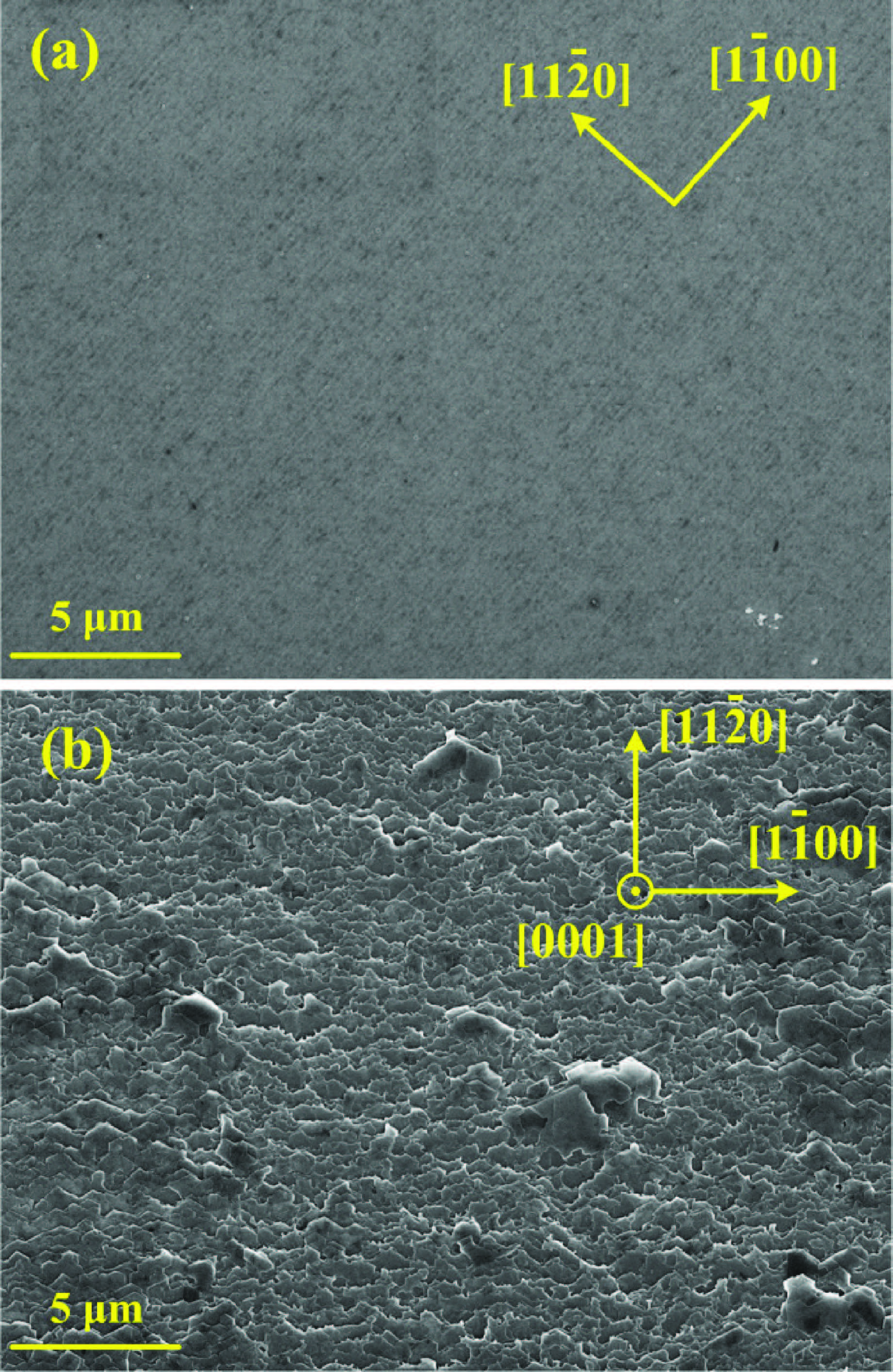
Table 1. Summary of layer contacts (Ti is the first layer deposited on the surface of 4H-SiC)
 DownLoad: CSV
Table 2. Element weight concentrations and atomic concentrations for the Ti (20 nm)/Al/Au contact shown in Figure 4.
DownLoad: CSV
| [1] | |
| [2] | |
| [3] | |
| [4] | |
| [5] | |
| [6] | |
| [7] | |
| [8] | |
| [9] | |
| [10] | |
| [11] | |
| [12] | |
| [13] | |
| [14] | |
| [15] | |
| [16] | |
| [17] | |
| [18] | |
| [19] | |
| [20] | |
| [21] | |
| [22] | |
| [23] | |
| [24] | |
| [25] | |
| [26] | |
| [27] | |
| [28] | |
| [29] | |
| [30] | |
| [31] | |
| [32] | |
| [33] | |
| [34] |









Article views: 3313 Times PDF downloads: 83 Times Cited by: 0 Times
Received: 28 April 2015 Revised: Online: Published: 01 December 2015
| Citation: |
Chao Han, Yuming Zhang, Qingwen Song, Xiaoyan Tang, Hui Guo, Yimen Zhang, Fei Yang, Yingxi Niu. Interface annealing characterization of Ti/Al/Au ohmic contacts to p-type 4H-SiC[J]. Journal of Semiconductors, 2015, 36(12): 123006. doi: 10.1088/1674-4926/36/12/123006
****
C Han, Y M Zhang, Q W Song, X Y Tang, H Guo, Y M Zhang, F Yang, Y X Niu. Interface annealing characterization of Ti/Al/Au ohmic contacts to p-type 4H-SiC[J]. J. Semicond., 2015, 36(12): 123006. doi: 10.1088/1674-4926/36/12/123006.

|
Project supported by the Key Specific Projects of Ministry of Education of China(No. 625010101), the Specific Project of the Core Devices(No. 2013ZX01001001-004), and the Science Project of State Grid(No. SGRI-WD-71-14-004).
| [1] | |
| [2] | |
| [3] | |
| [4] | |
| [5] | |
| [6] | |
| [7] | |
| [8] | |
| [9] | |
| [10] | |
| [11] | |
| [12] | |
| [13] | |
| [14] | |
| [15] | |
| [16] | |
| [17] | |
| [18] | |
| [19] | |
| [20] | |
| [21] | |
| [22] | |
| [23] | |
| [24] | |
| [25] | |
| [26] | |
| [27] | |
| [28] | |
| [29] | |
| [30] | |
| [31] | |
| [32] | |
| [33] | |
| [34] |

 WeChat ID
Journal of Semiconductors © 2017 All Rights Reserved 京ICP備05085259號-2