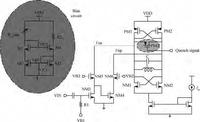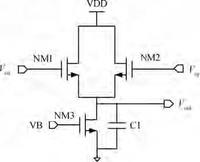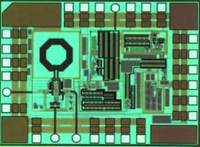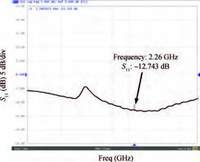


Fig. 1.
The topology of EEG chip
SEMICONDUCTOR INTEGRATED CIRCUITS
Yiqi Mao1, 2, Tongqiang Gao1, 2, Xiaodong Xu1, Haigang Yang1, 2, and Xinxia Cai1, 2
Corresponding author: Yang Haigang,yanghg@mail.ie.ac.cn
Abstract: A fully integrated super-regenerative wake-up receiver for wireless body area network applications is presented. The super-regeneration receiver is designed to receive OOK-modulated data from the base station. A low power waveform generator is adopted both to provide a quench signal for VCO and to provide a clock signal for the digital module. The receiver is manufactured in 0.18 μm CMOS process and the active area is 0.67 mm2. It achieves a sensitivity of -80 dBm for 10-3 BER with a data rate of 200 kbps. The power consumption of the super-regenerative wake-up receiver is about 2.16 mW.
Key words: super-regenerative receiver, wake-up circuit, EEG, OOK, CMOS
| [1] |
Armstrong E H. Some recent developments of regenerative circuits. Proceedings of the Institute of Radio Engineers, 1922, 10(4): 244 http://cn.bing.com/academic/profile?id=2150943617&encoded=0&v=paper_preview&mkt=zh-cn
|
| [2] |
Favre P, Joehl N, Vouilloz A, et al. A 2-V 600-μ A 1-GHz BiCMOS super-regenerative receiver for ISM application. IEEE J Solid-State Circuit, 1998, 33(12): 2186 doi: 10.1109/4.735703
|
| [3] |
Zahabi A, Anis M, Ortmanns M. 2.4 GHz super-regeneration amplifier with degenerative quenching technique for RF-pulse width transceiver. IEEE International Symposium on Circuits and System (ISCAS), 2012: 2147 http://cn.bing.com/academic/profile?id=1967046438&encoded=0&v=paper_preview&mkt=zh-cn
|
| [4] |
Otis B, Chee Y H, Rabaey J. A 400μ W-RX, 1.6 mW-TX super-regenerative transceiver for wireless sensor networks. Solid-State Circuits Conference (ISSCC), 2005, 1: 396
|
| [5] |
Chen J Y, Flynn M P, Hayes J P. A fully integrated auto-calibrated super-regenerative receiver in 0.13-μm CMOS. IEEE J Solid-State Circuits, 2007, 42(9): 1976 doi: 10.1109/JSSC.2007.903092
|
| [6] |
Meyer R. Low-power monolithic RF peak detector analysis. IEEE J Solid State Circuits, 1995, 30(1): 65 doi: 10.1109/4.350192
|
| [7] |
Rabaey J M, Chandrakasam A, Nikolic B. Digital integrated circuits: a design perspective. 2nd ed. Electronics & VLSI, 2002 http://cn.bing.com/academic/profile?id=2157024459&encoded=0&v=paper_preview&mkt=zh-cn
|
| [8] |
Chen J Y. Design of low-power super-regenerative receivers. The University of Michigan, 2006
|
| [9] |
Barner R, Liu J. A 0.8 V 1.52 MHz MSVC relaxation oscillator with inverted mirror feedback reference for UHF RFID. IEEE Custom Integrated Circuits Conference (CICC), 2006: 769
|
| [10] |
Harrison R R, Charles C. A low-power low-noise CMOS amplifier for neural recording applications. IEEE J Solid-State Circuits, 2003, 38(6): 958 doi: 10.1109/JSSC.2003.811979
|
| [11] |
Zhu Wenrui, Yang Haigang, Gao Tongqiang, et al. A baseband circuit for wake-up receivers with double-mode detection and enhanced sensitivity robustness. Journal of Semiconductors, 2013, 34(8): 085011 doi: 10.1088/1674-4926/34/8/085011
|
| [12] |
Liu Y H, Lin T H. A delta-sigma pulse-width digitization technique for super-regenerative receivers. IEEE J Solid State-Circuits, 2010, 45(10): 2066 doi: 10.1109/JSSC.2010.2061614
|
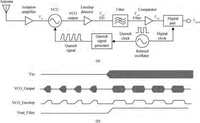


Table 1. Performance comparison between simulation and measured results

|
Table 2. Performance comparison with other works

|
| [1] |
Armstrong E H. Some recent developments of regenerative circuits. Proceedings of the Institute of Radio Engineers, 1922, 10(4): 244 http://cn.bing.com/academic/profile?id=2150943617&encoded=0&v=paper_preview&mkt=zh-cn
|
| [2] |
Favre P, Joehl N, Vouilloz A, et al. A 2-V 600-μ A 1-GHz BiCMOS super-regenerative receiver for ISM application. IEEE J Solid-State Circuit, 1998, 33(12): 2186 doi: 10.1109/4.735703
|
| [3] |
Zahabi A, Anis M, Ortmanns M. 2.4 GHz super-regeneration amplifier with degenerative quenching technique for RF-pulse width transceiver. IEEE International Symposium on Circuits and System (ISCAS), 2012: 2147 http://cn.bing.com/academic/profile?id=1967046438&encoded=0&v=paper_preview&mkt=zh-cn
|
| [4] |
Otis B, Chee Y H, Rabaey J. A 400μ W-RX, 1.6 mW-TX super-regenerative transceiver for wireless sensor networks. Solid-State Circuits Conference (ISSCC), 2005, 1: 396
|
| [5] |
Chen J Y, Flynn M P, Hayes J P. A fully integrated auto-calibrated super-regenerative receiver in 0.13-μm CMOS. IEEE J Solid-State Circuits, 2007, 42(9): 1976 doi: 10.1109/JSSC.2007.903092
|
| [6] |
Meyer R. Low-power monolithic RF peak detector analysis. IEEE J Solid State Circuits, 1995, 30(1): 65 doi: 10.1109/4.350192
|
| [7] |
Rabaey J M, Chandrakasam A, Nikolic B. Digital integrated circuits: a design perspective. 2nd ed. Electronics & VLSI, 2002 http://cn.bing.com/academic/profile?id=2157024459&encoded=0&v=paper_preview&mkt=zh-cn
|
| [8] |
Chen J Y. Design of low-power super-regenerative receivers. The University of Michigan, 2006
|
| [9] |
Barner R, Liu J. A 0.8 V 1.52 MHz MSVC relaxation oscillator with inverted mirror feedback reference for UHF RFID. IEEE Custom Integrated Circuits Conference (CICC), 2006: 769
|
| [10] |
Harrison R R, Charles C. A low-power low-noise CMOS amplifier for neural recording applications. IEEE J Solid-State Circuits, 2003, 38(6): 958 doi: 10.1109/JSSC.2003.811979
|
| [11] |
Zhu Wenrui, Yang Haigang, Gao Tongqiang, et al. A baseband circuit for wake-up receivers with double-mode detection and enhanced sensitivity robustness. Journal of Semiconductors, 2013, 34(8): 085011 doi: 10.1088/1674-4926/34/8/085011
|
| [12] |
Liu Y H, Lin T H. A delta-sigma pulse-width digitization technique for super-regenerative receivers. IEEE J Solid State-Circuits, 2010, 45(10): 2066 doi: 10.1109/JSSC.2010.2061614
|









Article views: 3932 Times PDF downloads: 29 Times Cited by: 0 Times
Received: 04 January 2016 Revised: 12 April 2016 Online: Published: 01 September 2016
| Citation: |
Yiqi Mao, Tongqiang Gao, Xiaodong Xu, Haigang Yang, Xinxia Cai. A fully integrated CMOS super-regenerative wake-up receiver for EEG applications[J]. Journal of Semiconductors, 2016, 37(9): 095001. doi: 10.1088/1674-4926/37/9/095001
****
Y Q Mao, T Q Gao, X D Xu, H G Yang, X X Cai. A fully integrated CMOS super-regenerative wake-up receiver for EEG applications[J]. J. Semicond., 2016, 37(9): 095001. doi: 10.1088/1674-4926/37/9/095001.

|
National Natural Science Foundation of China 61474120
National Basic Research Program of China 2014CB744600
Project supported by the National Basic Research Program of China (No. 2014CB744600) and the National Natural Science Foundation of China (No. 61474120).
| [1] |
Armstrong E H. Some recent developments of regenerative circuits. Proceedings of the Institute of Radio Engineers, 1922, 10(4): 244 http://cn.bing.com/academic/profile?id=2150943617&encoded=0&v=paper_preview&mkt=zh-cn
|
| [2] |
Favre P, Joehl N, Vouilloz A, et al. A 2-V 600-μ A 1-GHz BiCMOS super-regenerative receiver for ISM application. IEEE J Solid-State Circuit, 1998, 33(12): 2186 doi: 10.1109/4.735703
|
| [3] |
Zahabi A, Anis M, Ortmanns M. 2.4 GHz super-regeneration amplifier with degenerative quenching technique for RF-pulse width transceiver. IEEE International Symposium on Circuits and System (ISCAS), 2012: 2147 http://cn.bing.com/academic/profile?id=1967046438&encoded=0&v=paper_preview&mkt=zh-cn
|
| [4] |
Otis B, Chee Y H, Rabaey J. A 400μ W-RX, 1.6 mW-TX super-regenerative transceiver for wireless sensor networks. Solid-State Circuits Conference (ISSCC), 2005, 1: 396
|
| [5] |
Chen J Y, Flynn M P, Hayes J P. A fully integrated auto-calibrated super-regenerative receiver in 0.13-μm CMOS. IEEE J Solid-State Circuits, 2007, 42(9): 1976 doi: 10.1109/JSSC.2007.903092
|
| [6] |
Meyer R. Low-power monolithic RF peak detector analysis. IEEE J Solid State Circuits, 1995, 30(1): 65 doi: 10.1109/4.350192
|
| [7] |
Rabaey J M, Chandrakasam A, Nikolic B. Digital integrated circuits: a design perspective. 2nd ed. Electronics & VLSI, 2002 http://cn.bing.com/academic/profile?id=2157024459&encoded=0&v=paper_preview&mkt=zh-cn
|
| [8] |
Chen J Y. Design of low-power super-regenerative receivers. The University of Michigan, 2006
|
| [9] |
Barner R, Liu J. A 0.8 V 1.52 MHz MSVC relaxation oscillator with inverted mirror feedback reference for UHF RFID. IEEE Custom Integrated Circuits Conference (CICC), 2006: 769
|
| [10] |
Harrison R R, Charles C. A low-power low-noise CMOS amplifier for neural recording applications. IEEE J Solid-State Circuits, 2003, 38(6): 958 doi: 10.1109/JSSC.2003.811979
|
| [11] |
Zhu Wenrui, Yang Haigang, Gao Tongqiang, et al. A baseband circuit for wake-up receivers with double-mode detection and enhanced sensitivity robustness. Journal of Semiconductors, 2013, 34(8): 085011 doi: 10.1088/1674-4926/34/8/085011
|
| [12] |
Liu Y H, Lin T H. A delta-sigma pulse-width digitization technique for super-regenerative receivers. IEEE J Solid State-Circuits, 2010, 45(10): 2066 doi: 10.1109/JSSC.2010.2061614
|

 WeChat ID
Journal of Semiconductors © 2017 All Rights Reserved 京ICP備05085259號(hào)-2
 DownLoad: